Operating capital
Jakarta
Still the commercial city. Licensing is national. Delivery is not.
Other emerging markets
An archipelago market whose startup problem is licensing, logistics, and a capital city that is no longer assumed to stay the capital.
Startup EcosystemsIndonesia
Indonesia’s investment ministry, which now also carries the downstream-industry brief, points businesses to the Online Single Submission system for risk-based licensing. OSS is a door. It is not a statement that a licence is fast, that every sector is open, or that a foreign shareholder is treated like a local one. Sector caps and negative lists move. They are not printed here.
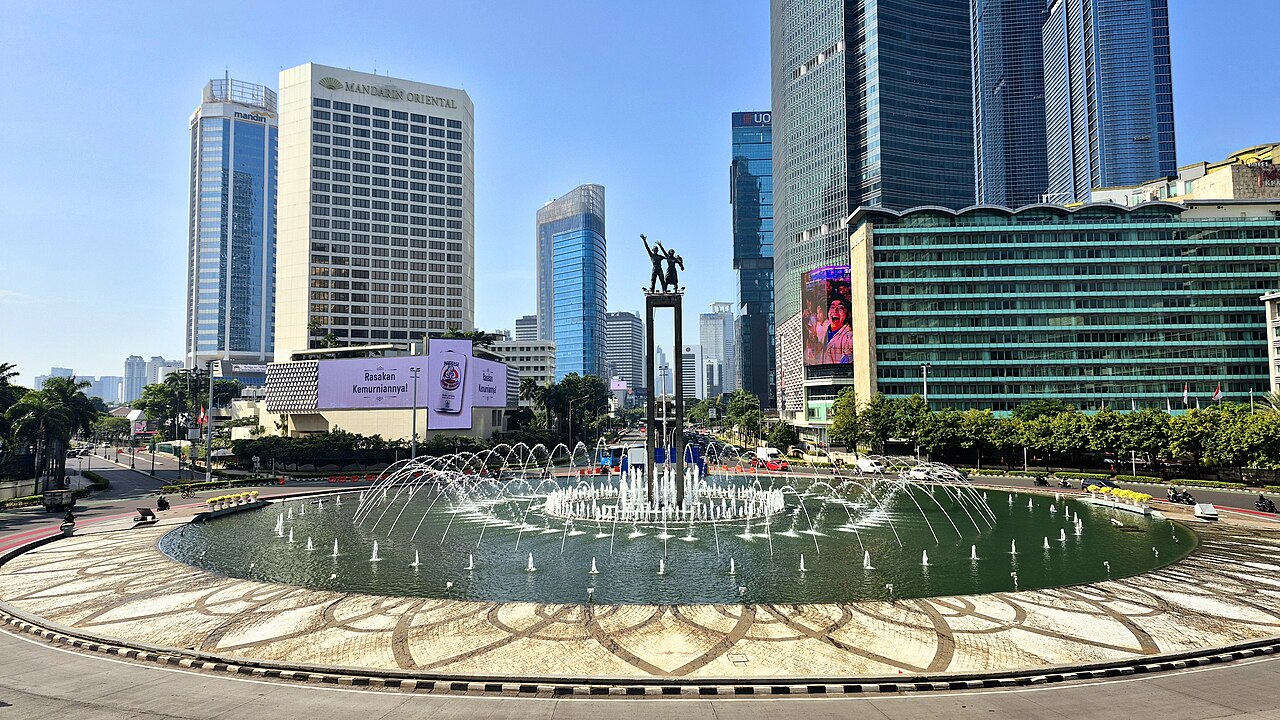
The commercial geography is stubborn. Jakarta and its satellite cities still hold the headquarters, the port-adjacent consumption, and the ministries, even while the state has designated a new capital project in East Kalimantan. That project’s timetable has already slipped more than once. A research note that treats the new capital as the place companies operate is ahead of the companies. A note that ignores the project misses a political use of the budget and of civil-service attention.
Scale, for almost every physical product, is the archipelago. A Jakarta app install is not a delivery in eastern Indonesia. Consumer platforms that grew up in this market learned that logistics is the company. Software that forgets it is a different, thinner business.
Separate urban systems, in the order they are discussed.
Trading businesses and digital platforms sit on a very large informal and small-formal economy. Venture-backed firms are the slice that raised outside money to intermediate that economy, mostly in commerce, mobility, and payments. They are not the whole of Indonesian enterprise.
A limited liability company (PT) is the ordinary vehicle. A foreign-owned PT PMA is a different licensing object from a locally owned company. OSS is how the filing is presented. The foreign-ownership rule for the sector is still the substance. Read the current investment list, not a blog’s recollection of it.
Domestic conglomerates and foreign venture funds have both been material. Public markets exist in Jakarta. A listed consumer platform shows that a listing happened. It does not show that the model produces cash.
The technical problem that matches the country is logistics, payments, and identity across weak addresses, not a new general-purpose model. Telecoms infrastructure is uneven by island. A product demoed in Jakarta on a good connection is not the product in the field.
Engineering talent is concentrated in Jabodetabek and, for a more technical campus culture, in Bandung. Senior operators who have run warehouses are as important as engineers and are hired from a different pool. English is not the customer language.
The University of Indonesia sits in Depok, inside greater Jakarta. Institut Teknologi Bandung is a separate city. Both matter. Neither is a startup programme. State universities and a large private-university sector produce the graduates the platforms hire.
Licensing runs through OSS on a risk-based logic. Financial products meet OJK, the financial-services authority, not only the investment ministry. Local governments still touch land, buildings, and some permits. A central filing does not retire a kabupaten.
The cost that surprises foreign teams is not only Jakarta rent. It is the working capital stuck in logistics, returns, and payments, and the management time spent on licensing. Doing Business ranks are not used. They were discontinued, and an archipelago was never one rank.
The Tanjung Priok port system and the toll roads of Java are the country’s economic core. Inter-island shipping and aviation are the rest of the company. Flooding in Jakarta is an operating risk for any ground-floor warehouse. Power is better in the commercial core than on the outer islands.
The domestic consumer market is the prize, and it is price-sensitive and geographically broken. Export of Indonesian technology is a smaller story than import of capital and of management models. Selling into the country from Singapore is a common structure and still requires an Indonesian operating company if people and customers are here.
The innovation that has mattered is organisational: aggregating informal supply, motorbike logistics, and payments into something a national account can buy. Scientific spin-outs are a thinner layer, closer to the public research institutes than to the Jakarta consumer brands.
National scale means a second and third island, a language that is officially one and practically many, and a licensing footprint that may not clone. The firms that reached that point became infrastructure themselves, with the political attention infrastructure attracts. That attention is part of the scale-up, not an interruption of it.
Across GRIP
The same place, read from another desk.
Continue with GRIP
Country briefs are the law and the national system. City briefs are where hiring, customers and rent actually happen.