Startup Ecosystems
Companies are local. The capital often is not.
Formation, talent, rules, and whether a firm built in one city can sell outside it.

GRIP reads a startup ecosystem as a set of institutions: a companies registry, a rule for foreign money, a labour market, a university system, and a customer who can pay. Cities are the unit. Countries set the law. A ranking that collapses both into one score is the format this section refuses.
India is filed first and written longest, because it is several city systems under one companies act and one foreign-exchange regime. The other BRICS economies follow as separate legal orders, not as a bloc with a shared startup model. Indonesia is here as a large archipelago market. The Emirates are here as a place people incorporate, which is not the same as a place their customers live.
Order on this page is editorial. It does not rank which country is ahead. New countries are added when there is a statute or a city system worth a brief, not when a list needs a tenth name.
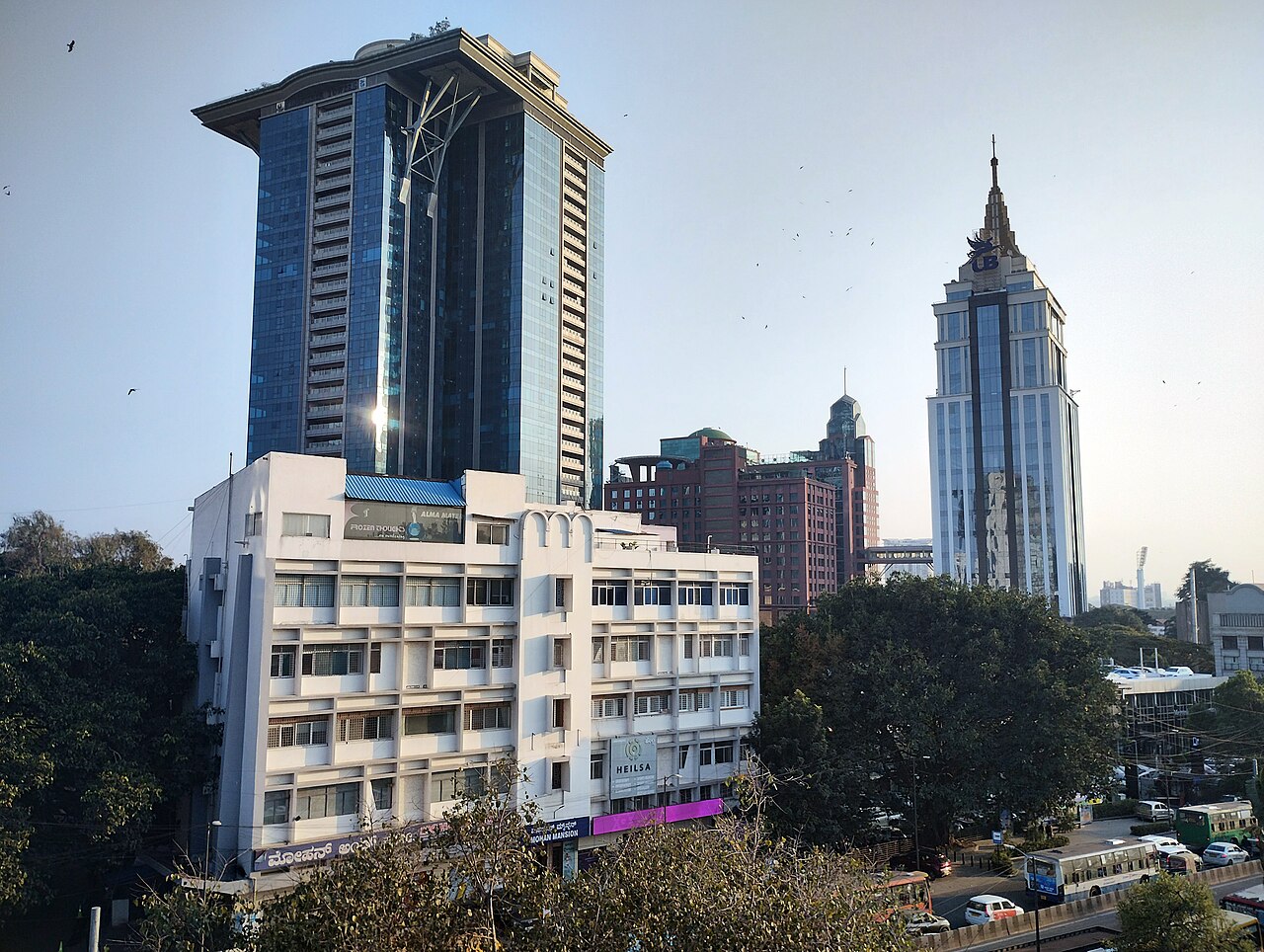
India
A continental company market.
The deepest brief in this vertical. A continental market with several city systems that do not share a government or a customer.
In this group
BRICS
Brazil, Russia, China, and South Africa, read as separate legal and urban systems. India is filed on its own above, not because the acronym is wrong.
- China
Beijing writes the rule. Shenzhen sits next to the factory. Shanghai sells to the firm that is already here.
- Brazil
Lei Complementar 182/2021 is the federal startup law. It does not simplify Brazil into one market.
- South Africa
Johannesburg intermediates the savings. Cape Town has the tighter product-company cluster. Neither is a national startup policy.
- Russia
Moscow still forms companies. Investors subject to US, EU, or UK measures cannot treat that as a normal cross-border deal.
In this group
Other emerging markets
Large domestic markets outside that set, where the startup question is distribution and licensing as much as software.
- Indonesia
OSS is the licensing door. Jakarta is still the operating commercial city. Distribution across islands is the business.
In this group
Formation hubs
Jurisdictions used to hold contracts, funds, and regional offices. A licence here is not proof of customers there.
- United Arab Emirates
Two financial free zones with their own courts, plus a mainland regime. Useful for a holding company. The customers are elsewhere.
Method
Twelve questions
Every country brief is written through the same lenses so a reader can compare a registry with a registry. Missing an answer is a finding.
01
Entrepreneurship
Who starts firms, and which of those firms the law and the culture actually treat as a startup rather than as a shop, a family company, or a contractor.
02
Startup formation
The legal object: company, partnership, or a foreign holding wrapper. Incorporation is not the same thing as a government recognition badge.
03
Venture capital
Who is allowed to pool money, on what licence, and whether the cheque can cross the border and come back.
04
Technology
The technical base the city actually has: software, hardware, payments rails, laboratories. A sector slogan is not a base.
05
Talent
Where skilled people are trained, employed, and willing to stay. A campus and a labour market are related and not identical.
06
Universities
Public and private institutions as suppliers of people and, sometimes, of research. They are not a venture pipeline by charter.
07
Regulation
Company law, sector regulators, foreign-investment rules, and the split between national and local government.
08
Cost of doing business
Rent, payroll, tax design, and compliance time. Not a discontinued league table.
09
Infrastructure
Power, transport, ports, payments, and identity systems. The constraint is often ordinary and local.
10
Access to markets
Who the customer is: a domestic household, a ministry, a foreign buyer, or a firm in the next city. Language and logistics sit inside this.
11
Innovation
What is actually new: a product, a process, a public rail that others build on, or a copy of a model from somewhere else.
12
Scale-up potential
What stops a working city product from becoming a national or cross-border company: capital, rules, management, or the simple fact of distance.
Markets desk
Services economies that stay on the markets desk.
A country can have firms, offices and outsourced work and still sit outside this file. A later ecosystem page would use the same twelve questions.
Continue with GRIP
The property question is a different file.
An ecosystem brief explains where firms form. A market brief explains tenure, use and the city as a place to hold property. They share a map and answer different questions.