India
Delhi-NCR
The political capital plus Gurugram and Noida. Policy customers, corporate headquarters, and three different state systems.
Startup EcosystemsIndiaDelhi-NCR
Three jurisdictions, one labour draw
Role in the system
Delhi-NCR is not a municipality. It is at least the National Capital Territory and two neighbouring states’ main commercial cities: Gurugram in Haryana, and Noida in Uttar Pradesh. People commute across those lines. Labour law, land, and many inspections do not.
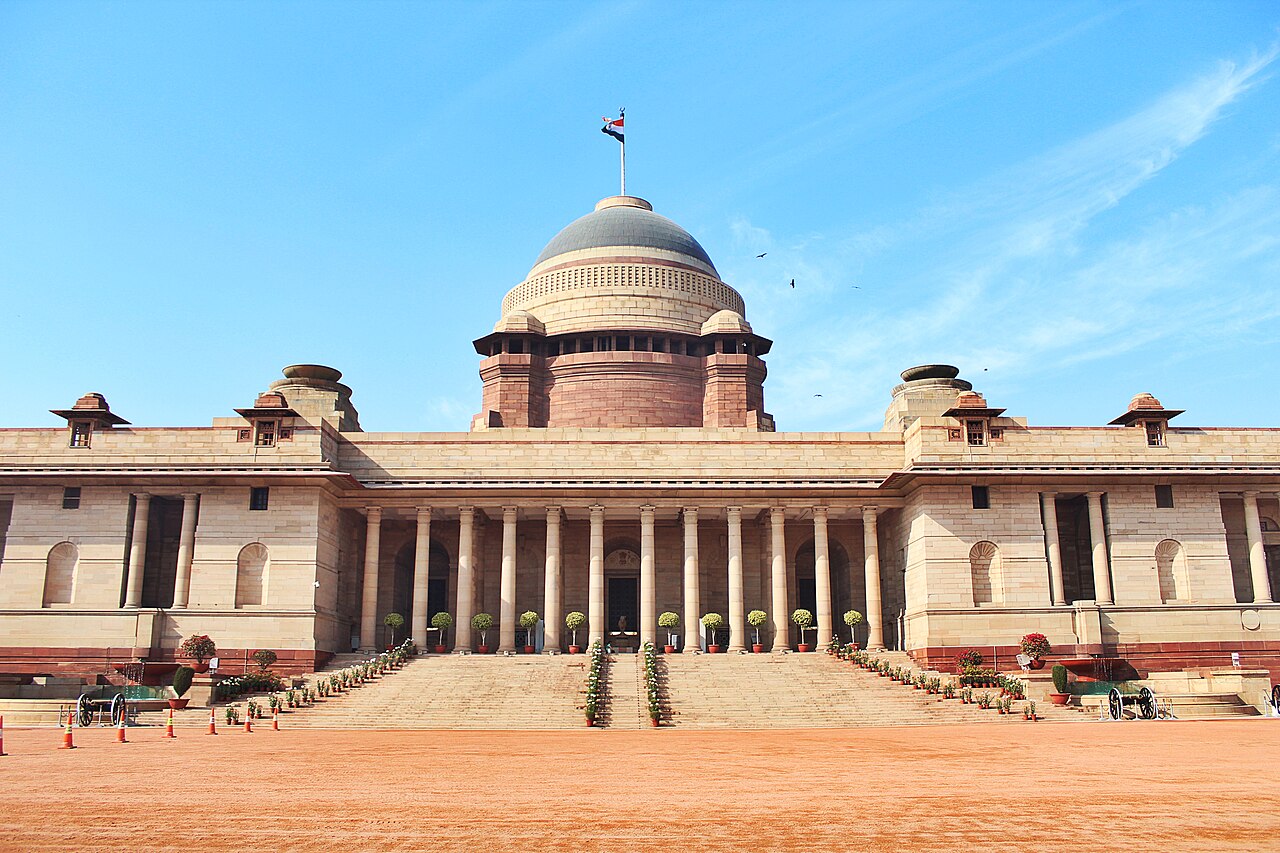
The photograph is the presidential estate, which is the right metaphor and a bad office address. Central ministries, regulators’ liaison offices, and foreign missions are the reason a certain kind of company keeps a team here. The reason is access to the state as a customer and as a rule-writer.
Which government you are actually under
A company registered with the Ministry of Corporate Affairs can employ people in all three places. Shops-and-establishments rules, professional tax, and local building permissions follow the address. Founders who say they are ‘based in Delhi’ often mean a Gurugram lease. The distinction matters the first time a notice arrives.
Noida’s industrial and IT estates were planned as an extension of the capital region and remain a different real-estate and political market from Gurugram’s private commercial stock. Noida and Gurugram keep separate planning authorities.
Customers
Government sales, public-sector pilots, and policy-facing businesses have a reason to be close to Delhi. So do companies whose buyers are the north Indian consumer market, which is not the same consumer as Bengaluru’s. Language and distribution partners differ.
Large Indian business houses and many multinational headquarters keep offices in the NCR. Selling to them is a relationship and procurement exercise. It is slower than an app install and more local than a Bengaluru product demo.
Talent
The region draws managers, policy people, and sales leadership more reliably than it draws the deepest bench of product engineers. Those engineers exist, including around newer campuses on the edge of the region, and they are not the reason the average corporate office is in Gurugram.
Delhi’s universities and the IIT in the wider region supply graduates. As elsewhere, the famous campus is not the bulk of the hiring.
Capital
Investor presence is real and secondary to Mumbai’s market infrastructure. What is more specific here is corporate venture and strategic capital from business groups headquartered in the region, and the occasional proximity to a ministry that controls a sector.
Proximity to policy is not a fundraising strategy. It is a way to misread a pilot as a market. A government memorandum of understanding is not revenue.
Risks
Air quality, political attention, and the three-state split are operating conditions. A company that needs quiet regulatory predictability should not confuse a successful Delhi pilot with a national licence.
The capital’s symbolic geography encourages a kind of briefing that talks about India from a central lawn. The customers are usually somewhere else. GRIP’s other Indian city notes exist so this one cannot stand in for them.
Also in India
Engineering labour market
Bengaluru
The deepest pool of product and export-engineering employers. The city is also a municipal system under strain.
Capital and the financial centre
Mumbai
SEBI, the exchanges, and the people who allocate Indian savings. Engineering density is not the reason to be here.
Services, life sciences, and a state project
Hyderabad
A planned technology district and a life-sciences corridor in Telangana, with a different cost structure from Mumbai or Bengaluru.
Factories, a port, and a research park
Chennai
Tamil Nadu’s commercial capital. Software, hospitals, and an automotive and electronics belt are different industries that share a city.
An engineering and manufacturing city
Pune
Automotive and mechanical engineering on one map, software parks on another, and a financial capital a few hours away that it should not imitate.
Smaller urban systems
Emerging centres
Cities where one piece of the stack is real: a factory, a college, a port, or a state incentive. Each place is named for that function.
Across GRIP
Elsewhere in the research
The same place, read from another desk.
- Startup EcosystemsCities in this systemThe country file lists the cities in the order they are discussed.
- Real EstateHow a building is readUse, tenure and the building itself.
- EconomyIndia economyIndia is filed first as a company-formation system. The economy a founder meets is not yet a GRIP property market.
- InfrastructureIndia infrastructurePublic digital infrastructure changed how a firm starts. It did not abolish roads, power, ports, or the distance between Indian cities.
- Startup EcosystemsIndia startup ecosystemCompany formation, capital, and scale. Property is a separate file.
- RelocationLiving in IndiaA visa, a job, and a title are separate permissions. The week that would be lived comes before the deed.
- Global InvestmentEmerging is a classificationOfficial groupings exist to organise data. They are revised, they overlap, and they do not carry a required return or a required risk.
- Global InvestmentDemography is slow, and it is localAge structure and urban settlement shape housing need over decades. They do not time a purchase, and a national trend is not a city.
Continue with GRIP
Read the country rulebook next.
A city can hire. It cannot invent a different companies act, a different sanctions regime, or a different exchange control.