India
Mumbai
SEBI, the exchanges, and the people who allocate Indian savings. Engineering density is not the reason to be here.
Startup EcosystemsIndiaMumbai
Capital and the financial centre
Role in the system
Mumbai is where Indian securities regulation and the main public exchanges sit. SEBI’s headquarters is here. BSE and NSE are the market infrastructure through which a company eventually lists, and through which domestic institutions already invest. A startup that never lists still raises money from people whose own money is managed in this city.
It is also a trading, media, and corporate headquarters city. The customer for a financial product is more likely to be here than in a technology park. The engineer is less likely to be.
Geography inside the city
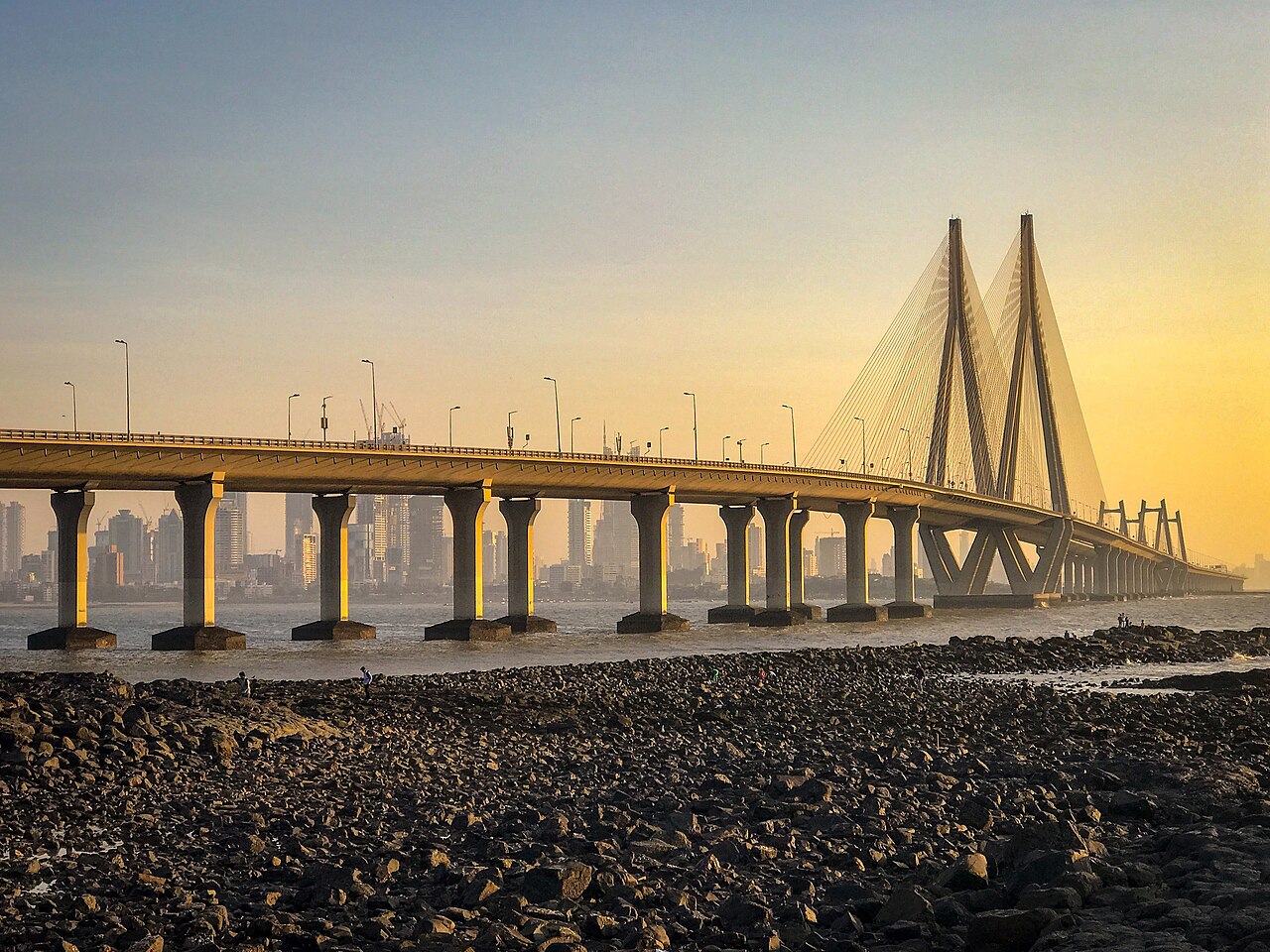
The old commercial core, the mill-land offices, Bandra-Kurla, and the western suburbs are different commercial districts with different rents and different commutes. The sea link in the photograph is a piece of that geography, not a symbol. Choosing a district is a cost decision and a hiring decision.
Maharashtra’s state machinery is a second government on top of the Centre. Land, shops and establishments, and local licences are not handled by SEBI. A fintech firm can be fascinated by the regulator and still be late on a municipal permission.
Capital
This is the city to understand how Indian household savings are actually intermediated: mutual funds, insurers, banks, and the alternative vehicles SEBI regulates. Venture is a small slice of that system. Founders who treat Mumbai as ‘where the VCs are’ and ignore the rest of the savings system misunderstand the exit and the regulated customer.
Foreign portfolio investors are a SEBI category of their own, distinct from a foreign direct investor in an unlisted company. The labels are not interchangeable. The Reserve Bank sits over the foreign-exchange side of both.
Talent
Finance, credit, and market operations are the deep skill. Consumer-product engineering exists and is not the city’s comparative advantage relative to Bengaluru or Hyderabad. IIT Bombay is across the water in Powai. It is one campus, not the labour market.
Pay has to clear Mumbai rents or people leave for a city where the same role buys a shorter commute. That arithmetic pushes some companies to keep a headquarters function here and an engineering function elsewhere. The split is common because it is rational, and it has a coordination cost.
Cost
Space is the constraint people notice first. The less visible cost is time: meetings with regulators, exchanges, and large financial clients are a Mumbai activity, and they consume founders who also have a product to ship somewhere else.
Rents move too quickly to pin to this page. A current commercial quote is the document that dates.
Scale and the limit
Mumbai scales a regulated financial product better than it scales a national logistics network. If the customer is a bank, an insurer, or a listed company, proximity is worth the rent. If the customer is a household in another language market, the city is a headquarters, not the market.
Listing, if it ever happens, will be processed through the institutions here. That is a reason to know the city. It is not a reason to start the company in the most expensive district available.
Also in India
Engineering labour market
Bengaluru
The deepest pool of product and export-engineering employers. The city is also a municipal system under strain.
Three jurisdictions, one labour draw
Delhi-NCR
The political capital plus Gurugram and Noida. Policy customers, corporate headquarters, and three different state systems.
Services, life sciences, and a state project
Hyderabad
A planned technology district and a life-sciences corridor in Telangana, with a different cost structure from Mumbai or Bengaluru.
Factories, a port, and a research park
Chennai
Tamil Nadu’s commercial capital. Software, hospitals, and an automotive and electronics belt are different industries that share a city.
An engineering and manufacturing city
Pune
Automotive and mechanical engineering on one map, software parks on another, and a financial capital a few hours away that it should not imitate.
Smaller urban systems
Emerging centres
Cities where one piece of the stack is real: a factory, a college, a port, or a state incentive. Each place is named for that function.
Across GRIP
Elsewhere in the research
The same place, read from another desk.
- Startup EcosystemsCities in this systemThe country file lists the cities in the order they are discussed.
- Real EstateHow a building is readUse, tenure and the building itself.
- EconomyIndia economyIndia is filed first as a company-formation system. The economy a founder meets is not yet a GRIP property market.
- InfrastructureIndia infrastructurePublic digital infrastructure changed how a firm starts. It did not abolish roads, power, ports, or the distance between Indian cities.
- Startup EcosystemsIndia startup ecosystemCompany formation, capital, and scale. Property is a separate file.
- RelocationLiving in IndiaA visa, a job, and a title are separate permissions. The week that would be lived comes before the deed.
- Global InvestmentEmerging is a classificationOfficial groupings exist to organise data. They are revised, they overlap, and they do not carry a required return or a required risk.
- Global InvestmentDemography is slow, and it is localAge structure and urban settlement shape housing need over decades. They do not time a purchase, and a national trend is not a city.
Continue with GRIP
Read the country rulebook next.
A city can hire. It cannot invent a different companies act, a different sanctions regime, or a different exchange control.