Savings, the JSE, corporate customers
Johannesburg
The city of listed companies and pension money. Venture sits beside that corporate market. It does not define it.
BRICS
The deepest capital market on the continent, an exchange-control regime that still shapes how equity leaves, and two cities that are not the same economy.

Startup EcosystemsSouth Africa
South Africa is the BRICS member whose startup question is often confused with its mining and banking economy. Those sectors built the Johannesburg Stock Exchange, the pension system, and the professional-services layer. Venture-backed companies are a thin activity on top of that layer. They use its lawyers and its currency rules. They are not the same industry.
Exchange control is administered day to day by the Financial Surveillance Department of the South African Reserve Bank, under powers delegated from the National Treasury. The department’s own description says the framework has been modernised and that a shift toward managing capital-flow risk, rather than approving every flow, has been announced. Circulars still set what an authorised dealer may do. Amounts are not quoted here because they are circular amounts. A company that wants to hold intellectual property offshore, or to take a foreign cheque, starts with this regime rather than with a founder’s account of the company.
Johannesburg and Cape Town are both in the notes below because they fail different tests. One is the corporate and savings capital. The other is a smaller city with a concentration of product firms, a provincial government of its own, and the same national currency and the same Eskom.
Separate urban systems, in the order they are discussed.
Savings, the JSE, corporate customers
The city of listed companies and pension money. Venture sits beside that corporate market. It does not define it.
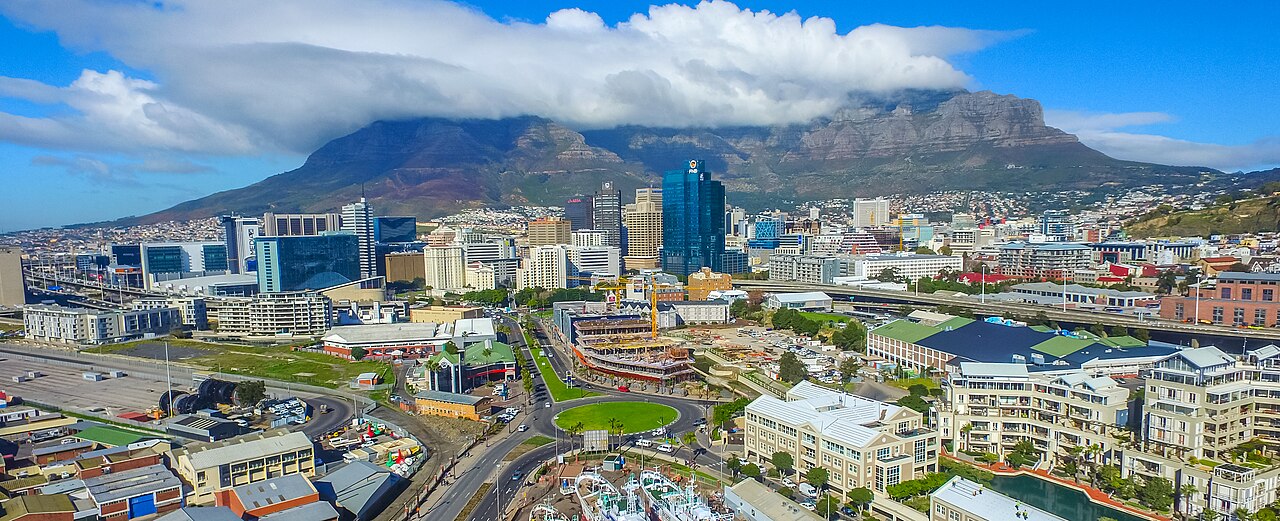
Product companies, same national rules
A smaller city with a real product cluster, a provincial government, and no exemption from the rand or from Eskom.
The same ten questions for every major cluster. Answers are qualitative. They are not scores, and they do not rank countries against each other.
Johannesburg and Cape Town are both briefed because they fail different tests. One holds the exchange, the banks, and the corporate buyers. The other holds a more visible product cluster and a different province. Pretoria’s universities and the administrative capital are not a third startup city on this page.
Software sold to banks, mines, and retailers, payments beside a sophisticated banking system, and energy tools born of an unreliable grid are the sectors that match the country. A borrowed consumer-social category does not. Mining technology is an industrial topic, not a punchline.
Pension savings are large and governed by rules that are not a venture mandate. Specialist funds are small beside the JSE. Foreign venture capital is often the scale-up cheque, which is why exchange control and the location of intellectual property become the deal. Amounts in Reserve Bank circulars are not quoted.
The main universities, split across Cape Town, Stellenbosch, Johannesburg, and Pretoria, produce strong graduates. Experienced engineers leaving the country is a hiring fact. No loss figure is printed. Firms already locate second offices around it.
The Companies Act of 2008 is the company statute. Exchange control, administered by the Reserve Bank’s Financial Surveillance Department, is the cross-border statute that matters. Labour law is part of the cost of the first formal hires. Sector regulators cover banks and communications.
The home market is deep for banks, mines, and formal retail, and small as a consumer technology market next to India, China, or Brazil. Each neighbouring African market has its own rules. No GDP comparison is printed. The useful fact is the shape of demand.
Johannesburg is the air gateway for the region. The rand is a currency of habit in neighbouring trade and not a legal union. Holding intellectual property offshore is an exchange-control question, not a flight.
Fibre in the main business districts is usable. Eskom’s power supply and the condition of freight rail and ports are national constraints. A software firm and a cold chain do not share the risk in the same degree.
Power, the cost and law of formal employment, a thin venture pool, and exchange control on the way in and out. Race and ownership rules in corporate procurement are part of the enterprise sale, not an optional context slide.
The durable assets are the legal and financial professions, the pension system, and companies that already sell into the rest of the region. They support a serious, small startup system. They do not make the country a continental consumer platform by default. Potential is that ceiling, stated without a date.
Formal small business, informal trade, and venture-backed firms are three populations. Black Economic Empowerment ownership rules shape corporate South Africa and therefore shape who can sell to it. A startup that ignores that framework will not understand its enterprise customer.
The Companies Act of 2008 is the statute. A private company is the ordinary vehicle. Foreign shareholding is legally possible and exchange-controlled. ‘Possible’ and ‘cleared by an authorised dealer’ are different stages.
Domestic pension money is large and heavily regulated. Very little of it is venture capital. Angel and specialist funds exist and are small relative to the JSE. Foreign funds are often the scale-up cheque, which is why exchange control and the location of the intellectual property become the deal.
Software, fintech adjacent to a sophisticated banking system, and climate and energy tools born of an unreliable grid are the local technical subjects. Deep hardware is limited by the size of the domestic industrial base. Mining technology is a real industrial topic and not a startup cliché to be mocked or romanticised.
The universities produce strong graduates. Emigration of experienced engineers is a standing fact of hiring. GRIP does not quote a loss figure. Firms already price it into where they locate a second office.
The University of Cape Town, Stellenbosch, the University of the Witwatersrand, and the University of Pretoria are the institutions most often tied to research and to technical hiring. They sit in different cities. A national ‘ecosystem’ sentence that puts them on one campus is geography-blind.
Company law is relatively modern. Exchange control is the distinctive cross-border rule. Sector regulators cover banks, credit, and communications. Labour law is protective and is part of the cost of the first ten formal hires.
Payroll and load-shedding mitigation (inverters, diesel, downtime) belong in the cost note alongside rent. The World Bank’s Doing Business ranks are not used. Power is a better example of why a single rank was never the right instrument.
Eskom’s inability to supply continuous power has been a national operating condition. Ports and freight rail have their own public-company problems. Fibre in the main business districts is a different, better, story. A software firm and a cold-chain firm do not share an infrastructure risk.
South African companies can sell into a sophisticated home market and then face a set of smaller, differently regulated African markets. The rand is the regional currency of habit. It is not a legal tender union. Enterprise sales to mines, banks, and retailers are a plausible path. Continental consumer scale has to be built country by country.
The innovations that match the country’s actual constraints are in payments, energy, security, and extractive industry, not in a copied consumer-social product. Public research councils exist. Their output becomes a company only with a licensee who can survive the currency rules.
The JSE is a real exit venue for companies that fit a listed-company mould, which most startups will not. A trade sale to a foreign buyer reopens exchange control and, often, a debate about where the intellectual property has been sitting. Scale that assumes a frictionless offshore flip is a different country’s legal system.
Across GRIP
The same place, read from another desk.
Continue with GRIP
Country briefs are the law and the national system. City briefs are where hiring, customers and rent actually happen.