Who typically looks here
Households and firms with a reason to be in Cairo, and a smaller set of buyers looking at a coast. The comparison with a Gulf city is a different market.
MarketsMiddle East
Jobs and services concentrate in Cairo. Alexandria is a second city on the Mediterranean. The coasts sell a different product. The canal is why the map matters. It does not describe a property return.
Cairo is the capital and the housing market that actually clears, mostly among Egyptians, mostly in pounds. New Cairo is the occupied eastern city. The New Administrative Capital is a later state project further east, and it should not be confused with either. Alexandria is the port. The Red Sea and Sinai coasts are tourism property, and Sinai is a different ownership statute.
The geography is the strategic fact. Egypt is African, it faces the Mediterranean, and the Suez Canal joins that sea to the Red Sea and the Indian Ocean route. Land traffic between Africa and Asia crosses here as well. Those are reasons the country sits in more than one region’s conversation. They are not a reason to treat a Cairo flat, a Hurghada hotel room, and a plot in the new capital as one asset.
Foreign ownership is possible and conditioned, under Law No. 230 of 1996 outside the special zones. The pound is the currency of wages and of most rents, and the central bank publishes the rate rather than promising it. The sections below separate the cities, the uses, the infrastructure, and the risks. The figures card carries the population milestone, fiscal-year growth, and the private-residence cap. The daily pound rate stays on the central bank’s page.
Households and firms with a reason to be in Cairo, and a smaller set of buyers looking at a coast. The comparison with a Gulf city is a different market.
Which city, whether the contract is registered, which tenancy law applies, and whether Sinai rules are even relevant.
A major domestic market and a strategic location. The work is separating the places. The page does not offer a return.
Figures
Only a named release is printed. The date on each line is that release, not the day this page was read.
Population inside Egypt
109 million
As of 9 May 2026
Released 9 May 2026
A million milestone of the CAPMAS population clock, linked to Ministry of Health birth and death records. This is not a census count. The same note puts the previous million on 16 August 2025.
Real GDP growth
4.4%
As of FY 2024/25
Ministry of Planning, Economic Development and International Cooperation
Released 30 September 2025
Fiscal year ended 30 June 2025. The quarterly note, dated 30 September 2025, also records 5 percent in the fourth quarter of that year. Later expectations are not printed.
Private-residence cap
2 properties, 4,000 m² each
As of Law No. 230 of 1996
Real Estate Registration and Notarization Department
Released 1996
A non-Egyptian private residence. The same instrument bars disposal for five years unless the Prime Minister allows it, and it excludes antiquities. Sinai is a different statute. The year is the law, not a statistical release.
Foreign ownership
Reviewed 25 September 2026
Rule
For a private residence, a non-Egyptian may own no more than two properties in the country, and the area of each may not exceed 4,000 square metres. The property may not be an antiquity. Title may not be transferred on until five years after acquisition, unless the Prime Minister authorises an earlier disposal. Property needed for a licensed activity is a separate permission. Sinai is outside this card.
Source
Law No. 230 of 1996, as set out by the Real Estate Registration and Notarization Department
City briefs
Cairo, New Cairo, the administrative capital, Alexandria, and the Red Sea do not share a tenant, a statute, or a working week.
Capital
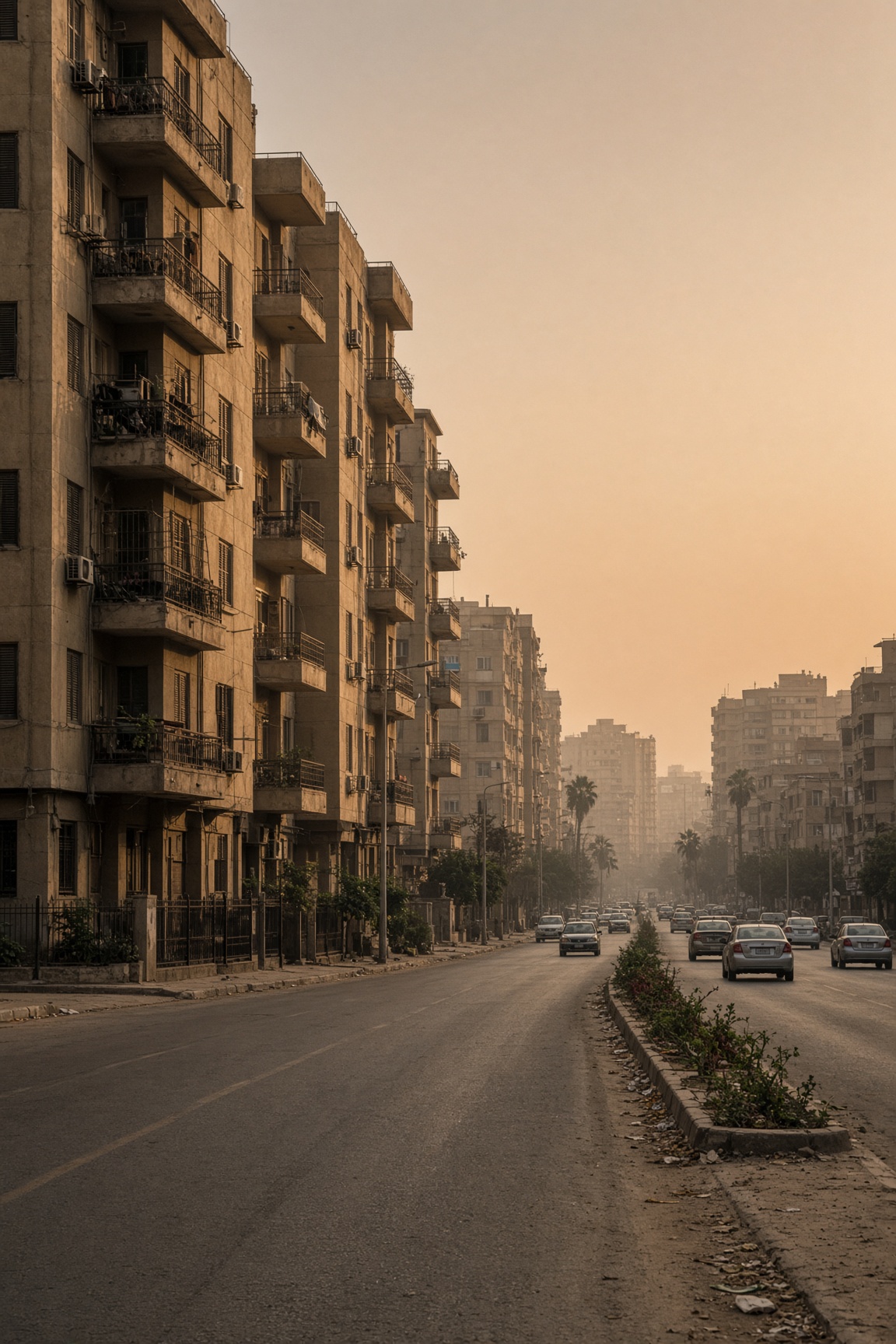
The jobs and the river. Greater Cairo crosses three governorates and then the desert cities on either side.
Eastern new city
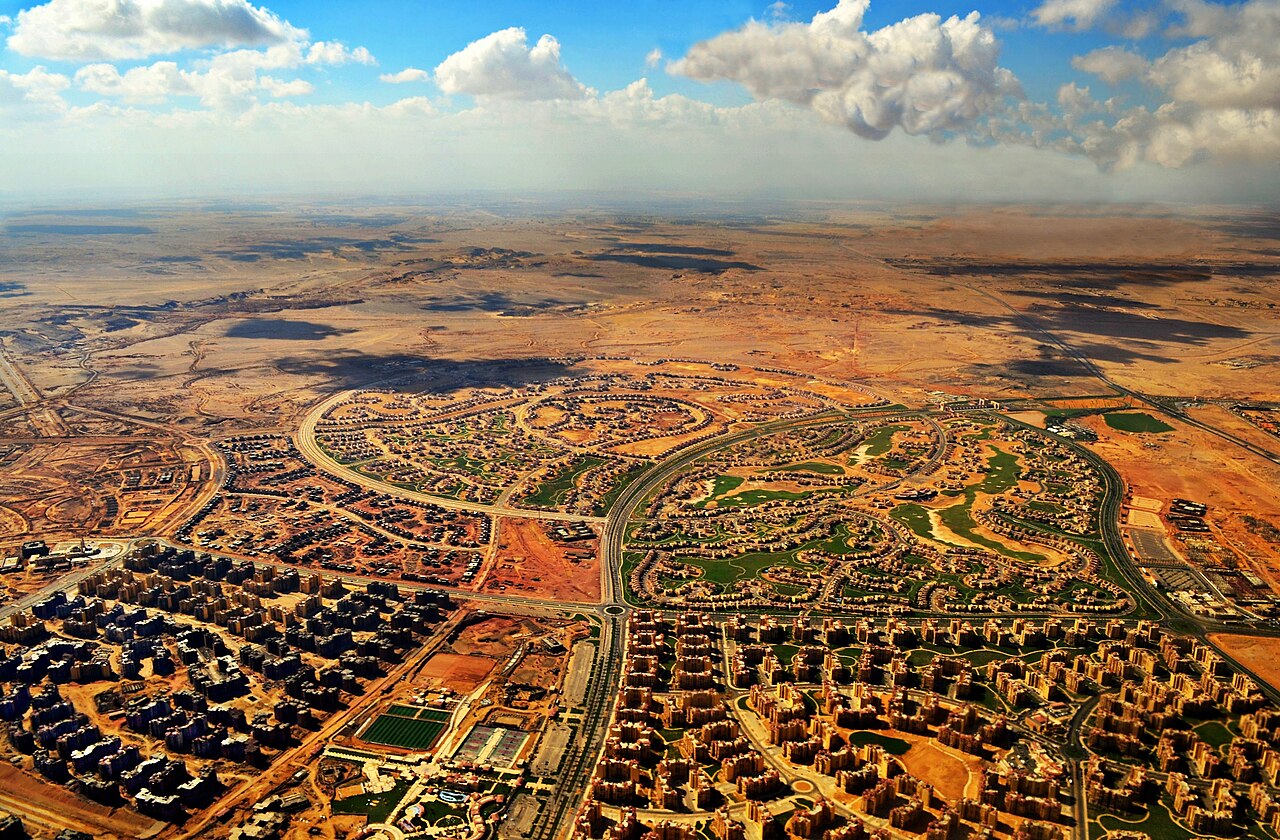
A desert-edge city of compounds and campuses, east of Downtown and west of the administrative capital.
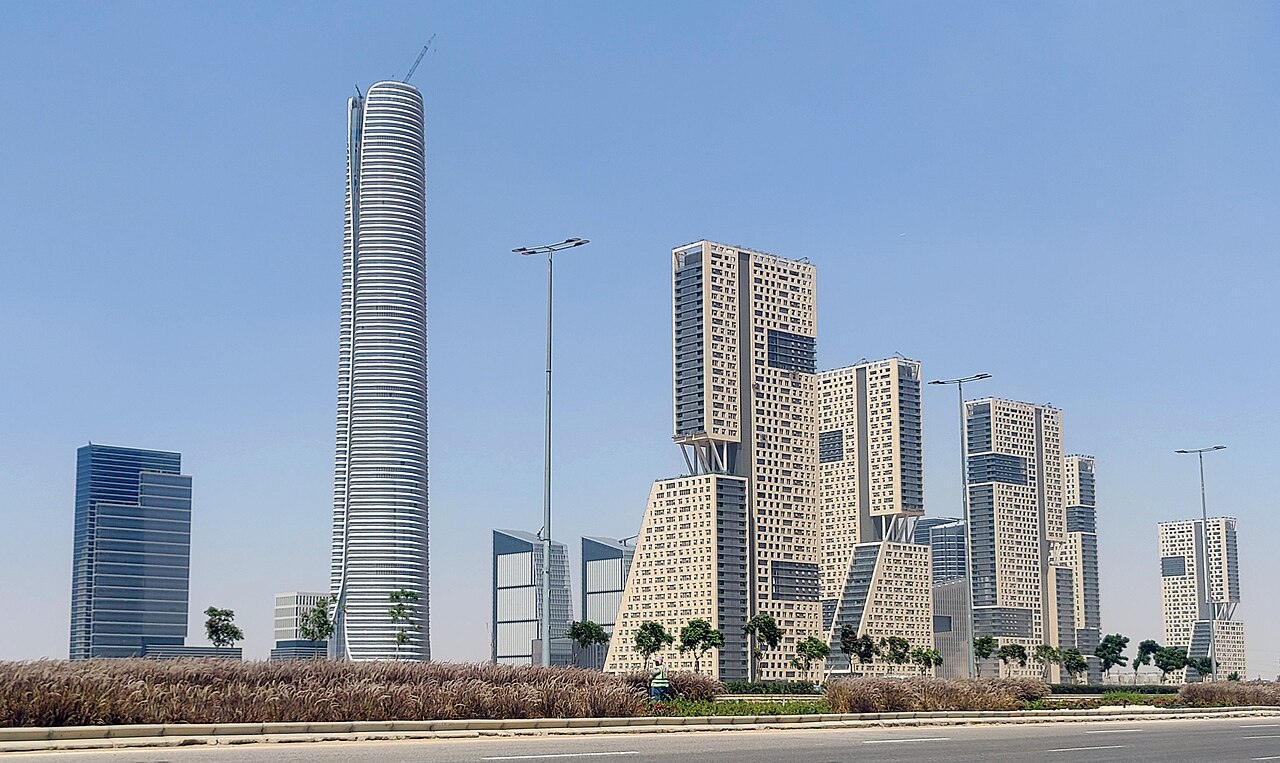
State project
A new seat of government, still becoming a city. Occupancy is the fact that matters, and it has to be seen.
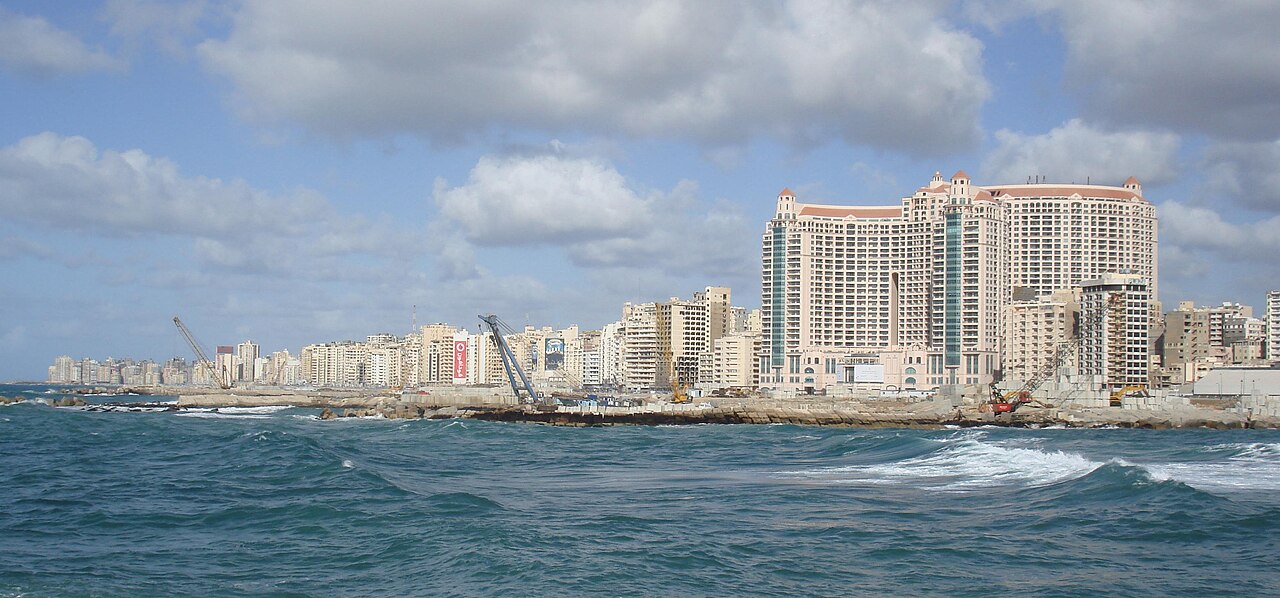
Mediterranean port
Egypt’s second city: a harbour, a university, and a Mediterranean coast with its own residents.
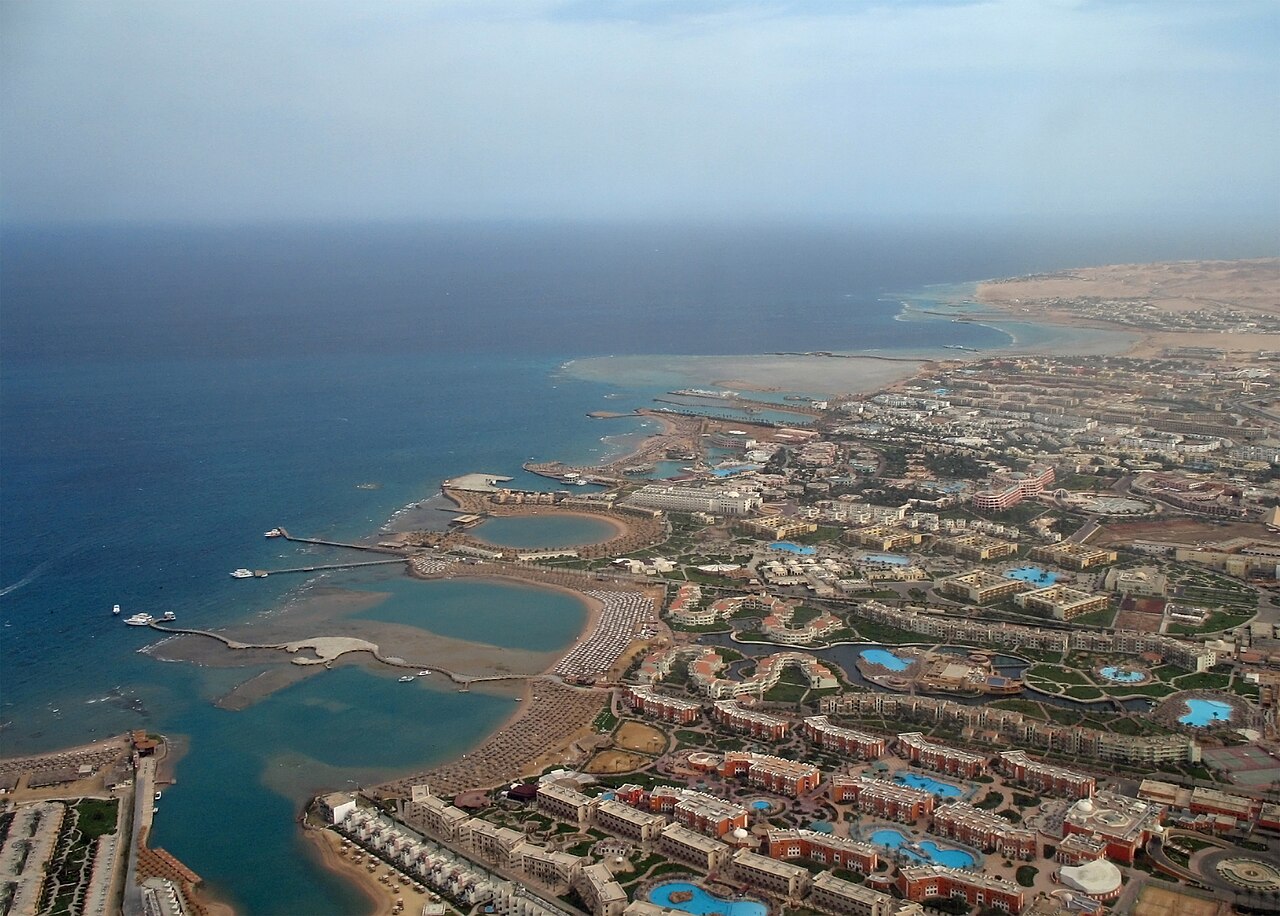
Coastal destinations
Hurghada is not Sharm El Sheikh, and neither is a Cairo flat. Tourism property, with a legal split at Sinai.
Each section carries the date it was last reviewed and the documents it was read against.
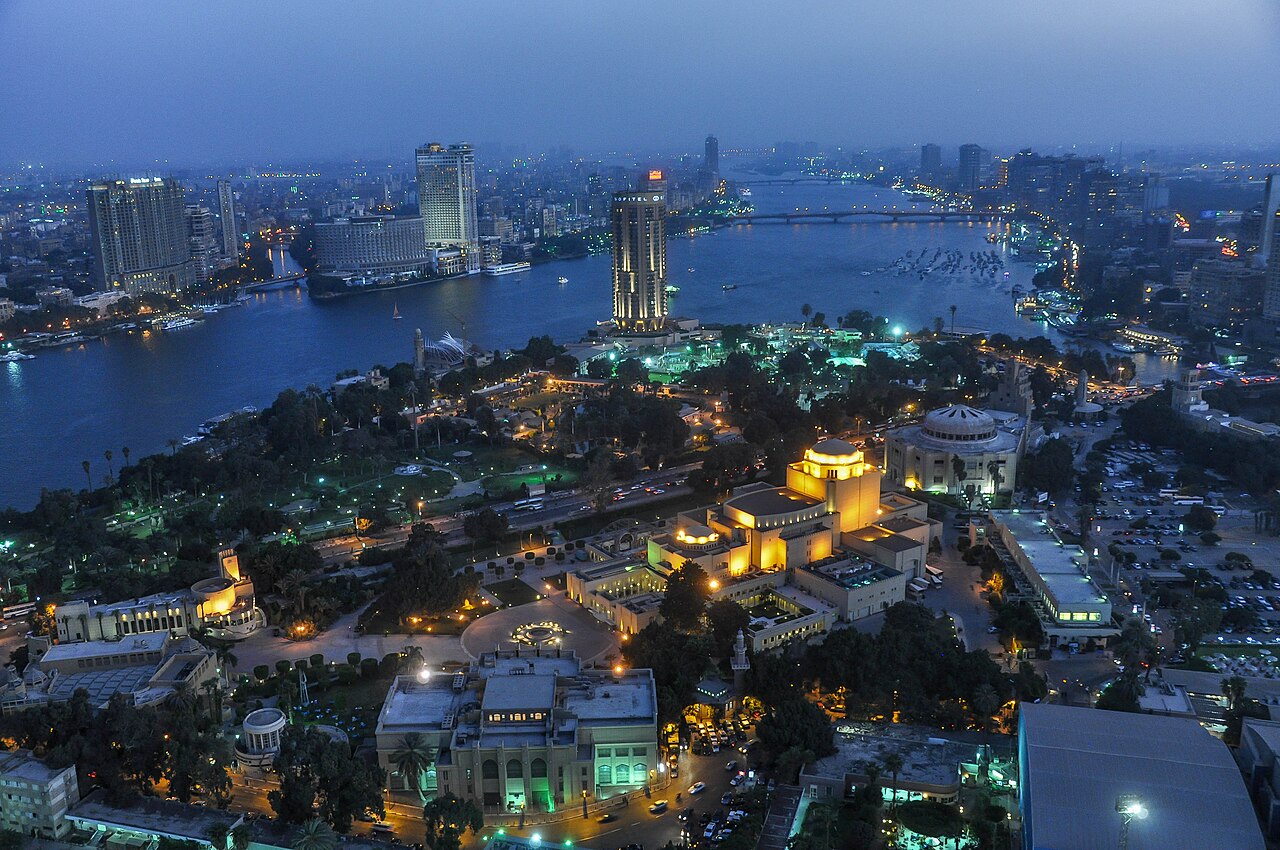
Cairo is the capital and the largest labour market. Greater Cairo runs across the governorates of Cairo, Giza, and Qalyubia, and then into the new cities the state built on the desert edge: New Cairo and Shorouk to the east, 6th of October and Sheikh Zayed to the west. A commute can cross more than one of those authorities.
The formal market most foreign buyers meet is apartments: older blocks in the historic city, and newer stock in compounds. Most of the city is housed differently. A large share of ordinary housing was built outside the formal permit system. It is part of the urban economy, and a different product from the compound.
The Nile, the historic core, and the citadel organise the centre. Zamalek, Garden City, Downtown, Mohandessin, and Heliopolis are different streets with different buildings and different tenants. None of them is New Cairo.
No price, yield, exchange rate, or population total is quoted. Numerical conditions in the ownership and tenancy statutes are left in the instrument.
New Cairo is a new urban community on the eastern desert plateau, developed under the New Urban Communities Authority. The authority’s own description places it among the cities begun to draw people and jobs off the narrow cultivated strip of the valley. It is a satellite of Cairo. The New Administrative Capital is a separate project further east.
The fabric is compounds, wide roads, and private schools and universities, including the American University in Cairo’s campus. Fifth Settlement is the address people use for a large part of this market. Retail and offices followed households and campuses. A weekday here can be busy and still be a long drive from the ministries and the river.
Demand is domestic as much as foreign: families who want a newer building, a gated street, and a school run that does not cross the old city. That is a preference, not evidence that the plateau has replaced Cairo.
No price, yield, exchange rate, or population total is quoted. Numerical conditions in the ownership and tenancy statutes are left in the instrument.
The New Administrative Capital is a state urban project east of New Cairo. Its stated purpose is to move government functions out of the historic capital and to build a new district of offices, housing, and ceremonial space. The New Urban Communities Authority is part of how the state builds cities of this kind. A finished tower and a city that people already live in are different stages.
Occupancy cannot be read off a masterplan. Ministries moving, and apartments already sold, are different facts. A district can look finished and still have few residents on an ordinary weekday. GRIP does not treat the new capital as an established occupier market. A later note can record which institutions have moved, against the announcement itself.
It should not be priced as New Cairo, and New Cairo should not be priced as Downtown. The road between them is real. The labour market is not yet one.
Open the Administrative Capital brief
No price, yield, exchange rate, or population total is quoted. Numerical conditions in the ownership and tenancy statutes are left in the instrument.
Alexandria is the Mediterranean port and the country’s second city. It is older than the desert cities and it does not behave like them. The corniche, the harbour, and a dense historic centre organise daily life. Summer visitors from Cairo add a season. They do not turn the city into a resort in the Red Sea sense.
The economic base is the port, industry along the coast, a university city, and services for a large resident population. Housing is overwhelmingly for people who live and work here. A foreign buyer who arrives from a holiday market will misread the stock.
The north coast beyond the city, including newer state projects such as New Alamein, is a different product: seasonal, closer to a holiday home, and separate from Alexandria’s working week.
No price, yield, exchange rate, or population total is quoted. Numerical conditions in the ownership and tenancy statutes are left in the instrument.
The Red Sea coast and the Sinai resorts are tourism property, under more than one governorate and more than one statute. Hurghada, El Gouna, and Marsa Alam sit in the Red Sea Governorate, on the African shore. Ain Sokhna, on the Gulf of Suez, is closer to Cairo and mixes weekend use with industry and the port. Sharm El Sheikh and Dahab are in South Sinai.
A hotel, a serviced apartment, and a holiday villa do not share a tenant. Occupancy follows flights, seasons, and the security reputation of that specific coast. A strong year for Cairo offices says nothing about a building in Hurghada.
Sinai is the legal special case. Decree-Law No. 14 of 2012 restricts how non-Egyptians hold land on the peninsula and routes much of that holding through usufruct and approvals. Later instruments have treated some tourist zones differently. The years, the shareholding floors, and the list of exceptions are in the current text. They are not printed here. Hurghada is not Sharm El Sheikh.
No price, yield, exchange rate, or population total is quoted. Numerical conditions in the ownership and tenancy statutes are left in the instrument.
The ordinary urban home is an apartment. Villas and townhouses appear in the new cities and in compounds, on land the developer assembled, often from the state. A unit in a finished building in an established neighbourhood and a unit sold off-plan in a new district are different risk objects: delivery, registration, and whether anyone is already living nearby.
Title is the quiet half of the purchase. Egyptian practice has long included preliminary contracts that are not the same thing as a registered right in the real-estate publicity system. What was signed, what was registered, and what a bank will lend against can be three documents. This brief will not tell a buyer which one they hold.
Foreign residential ownership sits under Law No. 230 of 1996. The investment authority still publishes conditions on the number of properties, the area, and the purpose (private residence, with a separate path for property needed to carry on a licensed activity), and an exclusion of antiquities. Exception powers have been delegated, including to the Minister of Justice. The figures move with the instrument. They are not copied onto this page.
No price, yield, exchange rate, or population total is quoted. Numerical conditions in the ownership and tenancy statutes are left in the instrument.
Offices follow the employers. Central Cairo still holds government, banks, and older professional firms. New Cairo and the western new cities hold a newer layer of private companies, schools, and clinics. The New Administrative Capital is a bet that government itself becomes an office tenant. Until the desks are there, it is a plan.
Street retail in the old city and mall retail in the new cities are different trades. The first lives on footfall that already exists. The second often opens with the compound. A commercial unit sold to an individual investor is not the same asset as a building let to a named company on a contract that has been read.
Investment Law No. 72 of 2017 is the statute for investment projects, administered with the General Authority for Investment and Free Zones. It is a business-licensing framework. It is not a substitute for a real-estate title, and its incentives are not a reason to buy an empty shop.
No price, yield, exchange rate, or population total is quoted. Numerical conditions in the ownership and tenancy statutes are left in the instrument.
Tourism property is a bed, or a holiday house, whose income depends on visitors. The Mediterranean north coast is seasonal and largely domestic. The Red Sea and South Sinai are more international, and more exposed to flights and to regional security. A managed hotel room and an apartment the owner hopes to let by the week are not the same business.
Short stays sit next to hotel licensing. A building that looks residential can still be in a tourist zone with rules about who may operate the letting. Sinai adds the ownership statute on top. Sales material that skips both is incomplete.
The Suez Canal is a shipping lane run by the Suez Canal Authority, a public authority established in 1956. It matters to ports, logistics land, and the national accounts. Hotel occupancy in Hurghada follows a different calendar.
No price, yield, exchange rate, or population total is quoted. Numerical conditions in the ownership and tenancy statutes are left in the instrument.
The country’s infrastructure fact is geographic before it is a metro line. The Nile is the water and the farmland. The Mediterranean and the Red Sea are the two coasts. The canal joins those seas and is the reason Egypt sits on a route that is African, Asian, and European at once. Ports, roads to the canal, and the authority that runs the waterway are the strategic layer.
Inside Cairo, the metro and a set of elevated roads and desert highways are what make the new cities reachable. Reachable is not the same as close at eight in the morning. A new city marketed as ‘minutes from’ the old one should be driven, not measured on an empty map.
Power, water, and drainage in the desert cities are built systems, not inherited ones. They are part of why the state can sell land on the plateau. They are also part of the holding cost and the delivery risk of any project that is ahead of the network.
No price, yield, exchange rate, or population total is quoted. Numerical conditions in the ownership and tenancy statutes are left in the instrument.
CAPMAS is the official statistical agency. It publishes the census and the labour series. This page does not reprint a population total. The structural fact those series are about, and that the housing ministry has planned around for decades, is concentration: people live on the Nile valley and the delta, a small share of the land.
Law No. 59 of 1979 created the New Urban Communities Authority to build new settlements off that strip. New Cairo is one result. The New Administrative Capital is a later one. The policy has been consistent. The outcome is uneven. Some new cities filled with jobs and schools. Others remained drawings with roads.
Urbanisation here is not only a capital spreading into farmland, though Cairo does that too. It is also a state-led attempt to move growth onto desert land. A research article can later set the census figures next to which of those cities actually hold residents. The figures will come from CAPMAS, dated, not from a sales deck.
No price, yield, exchange rate, or population total is quoted. Numerical conditions in the ownership and tenancy statutes are left in the instrument.
The formal door for an investment project is the General Authority for Investment and Free Zones, under Investment Law No. 72 of 2017. The law sets guarantees, including on paper the transfer of profits, and a menu of incentives that depend on activity and place. GRIP does not reproduce the rates. A project inside an investment zone is still a project that needs land, power, and customers.
The domestic market is the point for most businesses: a large population, a capital that concentrates government and spending, and a consumer economy in pounds. Export-oriented industry and canal-related logistics are real and smaller than the domestic story. Treating Egypt as a base from which to serve the Gulf is a different plan, with a different visa and a different customer.
What the statute does not settle is pace. Registration, licensing, and the ability to move foreign currency in and out have all, in some years, been slower than the text. This brief will not score the current quarter. It will say that a GAFI approval and a registered title are different files, and that both should be in the folder before anyone calls the market open.
No price, yield, exchange rate, or population total is quoted. Numerical conditions in the ownership and tenancy statutes are left in the instrument.
A non-Egyptian can own built property and, in defined cases, vacant land. Law No. 230 of 1996 is the frame. The private-residence conditions — two properties, 4,000 square metres each, and the five-year bar on disposal — are on the ownership card. Property required for a licensed activity is a different permission. Antiquities are out. Agricultural land sits under its own prohibition, separate from a residential purchase. Inheritance is treated separately from a purchase.
The company used to buy can itself be ‘non-Egyptian’ under that law if Egyptians do not own the majority of the capital, even if the company was formed in Egypt. Incorporation in Egypt does not turn a foreign-owned vehicle into a local owner. Sinai, and some strategic zones, are outside this general frame and need their own reading.
None of this is a due-diligence list. Registration, the developer’s right to sell the land, and any promise that a unit will be let by the building’s operator are local documents. GRIP does not review them. Counsel who practices this statute does.
No price, yield, exchange rate, or population total is quoted. Numerical conditions in the ownership and tenancy statutes are left in the instrument.
The currency is the Egyptian pound. The Central Bank of Egypt, under Law No. 194 of 2020, is responsible for price stability. It publishes a daily official exchange rate from the interbank market. The rate is a market price. It is not printed here, because a figure from the day this page was reviewed would already be the wrong figure for a reader arriving later.
Property conversations often mix currencies. A developer may quote dollars or euros. Wages, many local costs, and a large share of domestic rents are in pounds. A buyer who thinks in one unit and lives in the other is taking an exchange-rate exposure whether or not they meant to. The bank’s policy rate, also published by the Monetary Policy Committee, is part of the cost of pound borrowing. The rate is on the bank’s page. It is not copied here, and the next decision is not guessed.
Tight periods in the foreign-exchange market have mattered to businesses remitting profits and to households bringing money in. The investment law speaks to the right to transfer. Availability on a given week is an operating fact. A brief that promises either a stable pound or a one-way move is not research.
No price, yield, exchange rate, or population total is quoted. Numerical conditions in the ownership and tenancy statutes are left in the instrument.
Two tenancy regimes sit in the same city. Law No. 4 of 1996 put new contracts, and contracts that had already ended, under the Civil Code: the term and the rent are what the parties wrote. Older contracts, under Laws 49 of 1977 and 136 of 1981, were controlled rents with rights to stay that outlived the original tenant. Later statutes have started to unwind that older stock. Which regime a building is in decides who occupies it and what the owner can charge. Assume nothing from the facade.
Where the contract is new, demand follows jobs, universities, and hospitals. Central Cairo, New Cairo, and the western suburbs do not share a tenant. Furnished lets to foreigners and to visiting professionals are a thin slice. The bulk of the market is Egyptian households on a local salary, in pounds.
On the coast, ‘rental’ often means a holiday let or a hotel pool. That income is seasonal and operational. It should not be set beside a one-year Cairo lease as if they were one yield. No yield is calculated on this page.
No price, yield, exchange rate, or population total is quoted. Numerical conditions in the ownership and tenancy statutes are left in the instrument.
The risks that belong in the file are ordinary and large. The pound can move. Inflation changes what a pound rent is worth in another currency. New districts can be delivered ahead of the people who were meant to fill them. A contract can be less than a registered title. Old rent and new rent can occupy the same street. Tourism coasts are exposed to events far from the building. The state is also a dominant landowner and developer, so supply is a policy choice as well as a market one.
The facts that can be checked are ordinary. Cairo is a capital with a domestic occupier market that does not depend on a foreign buyer. The country sits on the land route between Africa and Asia and on the sea route between the Mediterranean and the Indian Ocean, and the canal is the managed version of that route. The Nile valley is crowded, which is why the new-city policy exists. Those are reasons to study the market. They do not describe a return.
Later articles can take one of these apart with a date and a source: a census table, a tenancy amendment, a registration practice, a canal year, a policy-rate decision. This hub is the map those articles will hang on. It does not make an offer.
No price, yield, exchange rate, or population total is quoted. Numerical conditions in the ownership and tenancy statutes are left in the instrument.
Across GRIP
The same place, read from another desk.
Continue with GRIP
If this market belongs on a research list, write to GRIP, or continue with the rest of the region.